
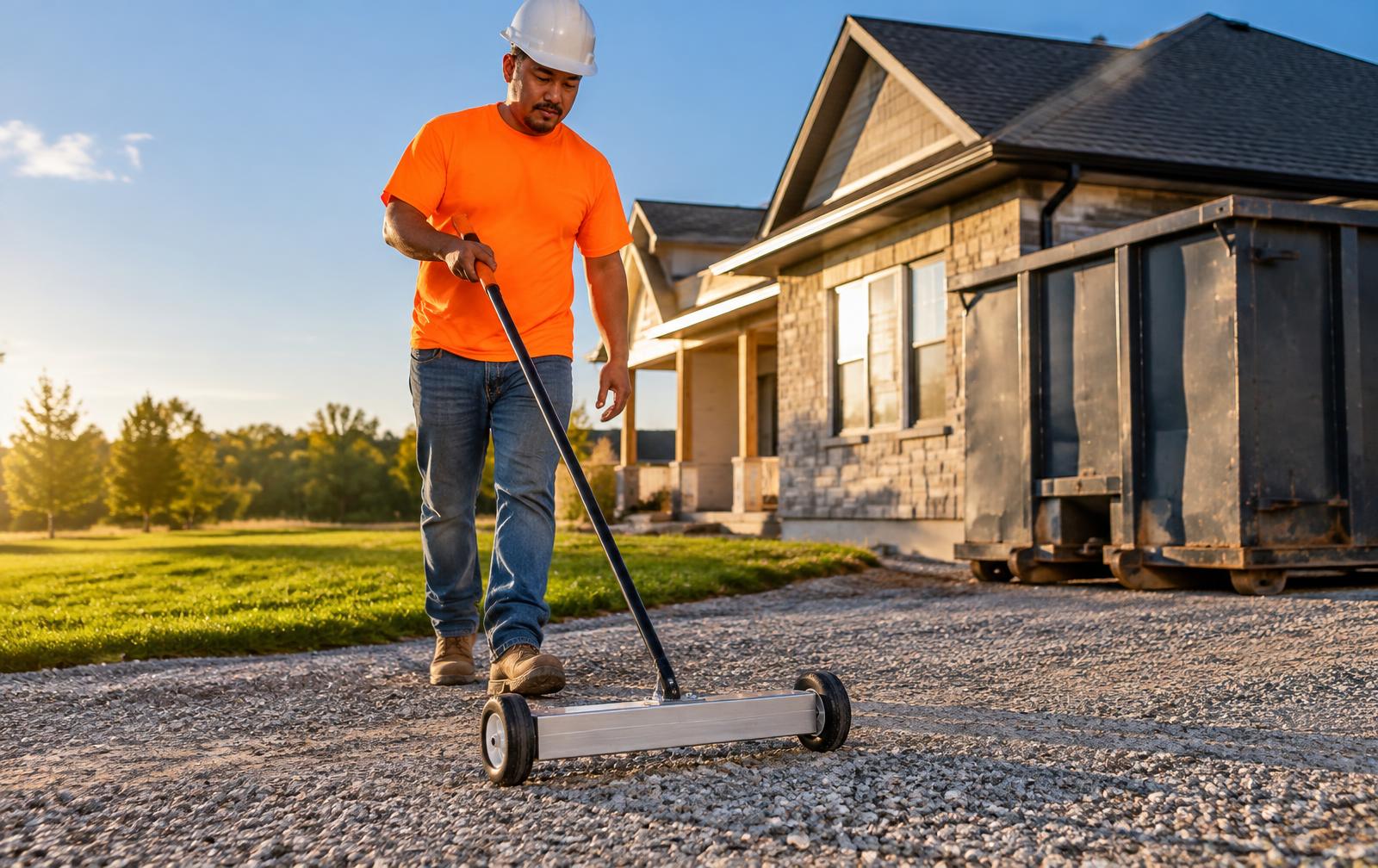
Why sweep a jobsite with a magnet?
Roofing, siding, framing and demolition all leave loose nails and screws behind. Gravel, grass and mulch hide them well, and one missed roofing nail can mean a flat tire for a client, a neighbour or your own crew truck. A magnetic sweeper picks up loose ferrous fasteners quickly, so a final cleanup takes minutes instead of a slow walk with eyes on the ground.
A clean finish is also good for business. Homeowners notice when a crew leaves a driveway the way it found it.
How a magnetic sweeper works
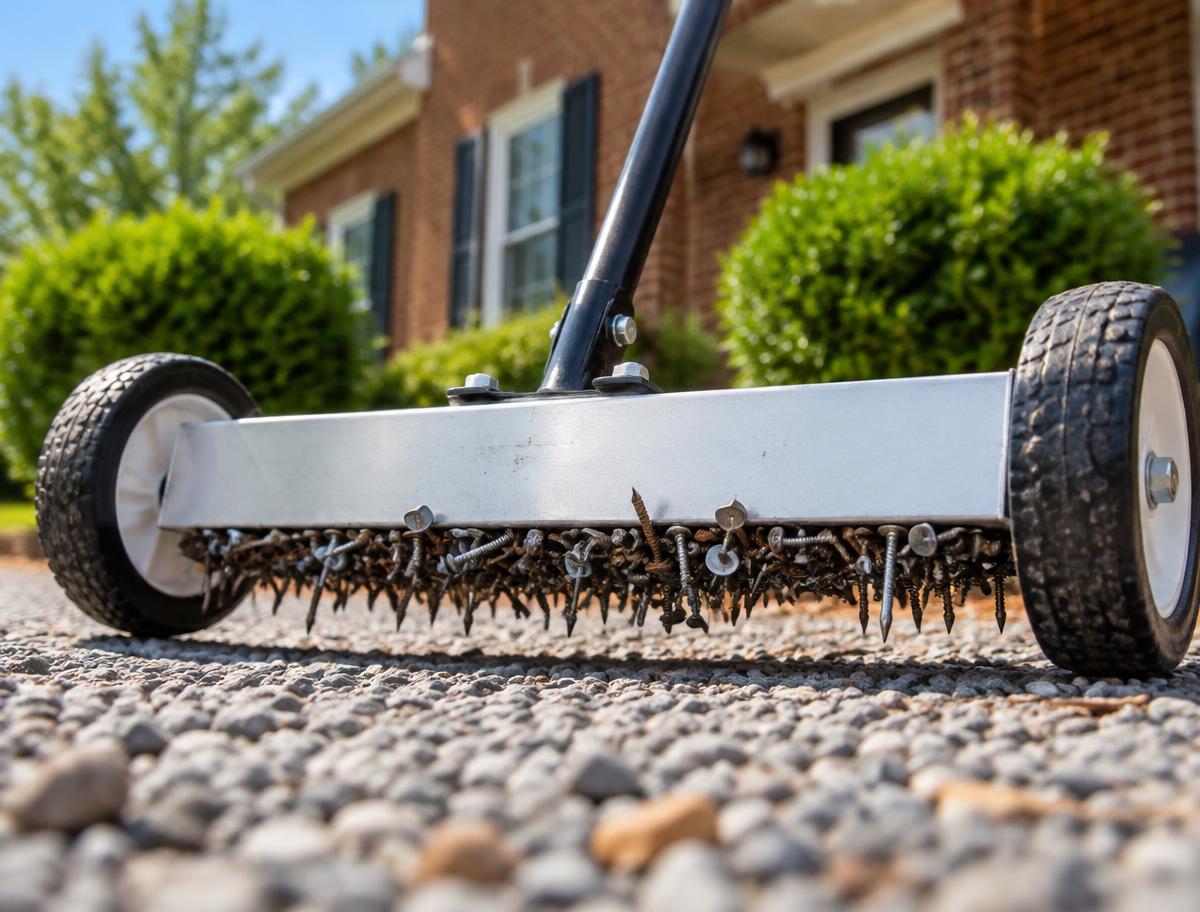
A wheeled floor sweeper carries a long magnet bar a short distance above the ground. As you roll it forward, steel nails, screws, staples and shavings jump up and stick to the bar. Many models include a release handle or knob that lifts the magnet away from its housing so the debris drops off into a bin or bucket. Magnets do not pick up aluminium, copper, stainless steel that is not magnetic, wood or plastic.
Choosing the right magnetic tool
| Tool | Best for | Strengths | Limitations |
|---|---|---|---|
| Wheeled floor sweeper | Driveways, shop floors, lawns, parking areas | Covers wide areas quickly, quick-release cleanup on many models | Needs a reasonably even surface to roll |
| Hand-held pickup magnet | Roof decks, flower beds, corners | Compact, easy to carry up a ladder | Small coverage area |
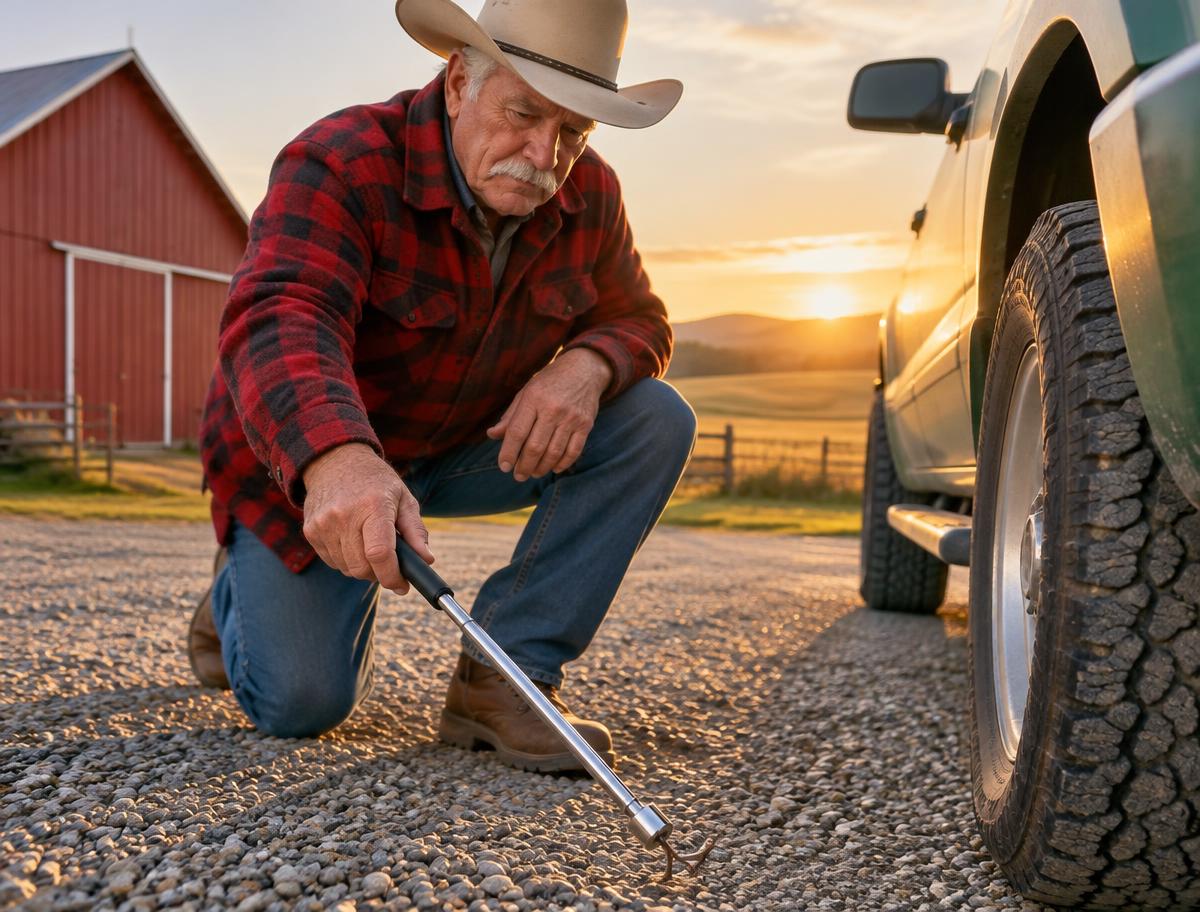
| Telescoping pickup tool | Gaps, engine bays, under equipment | Long reach into tight spaces | Picks up only a few items at a time |
| Magnetic parts tray | Holding fasteners while you work | Keeps screws and bolts from rolling away | Prevents losses rather than cleaning up |
A jobsite cleanup routine
1. **Sweep as you go.** A quick pass at lunch and the end of each day stops debris from being driven into gravel or mowed into lawns. 2. **Overlap your passes.** Work in straight rows and overlap each pass so nothing slips between them. 3. **Cover the drop zones.** Focus on the drip line under eaves, around dumpsters and along the path from the roof to the bin. 4. **Go slowly on gravel and grass.** Slower passes give the magnet time to pull fasteners up from between stones and blades. 5. **Empty often.** A loaded bar is weaker and messier. Release debris into a container before it builds up. 6. **Finish with a hand magnet.** Check beds, corners and steps that a wheeled sweeper cannot reach.

Roofing jobs need extra care
Tear-offs scatter thousands of old nails. Tarps and catch-alls help, but nails still bounce into lawns and gardens. Plan a sweep of the full perimeter, the driveway, the street edge and the client's parking area before you leave. Keep a hand-held magnet on the roof for loose fasteners near the eaves, and always follow fall-protection rules when working at height.
Shop and farm use
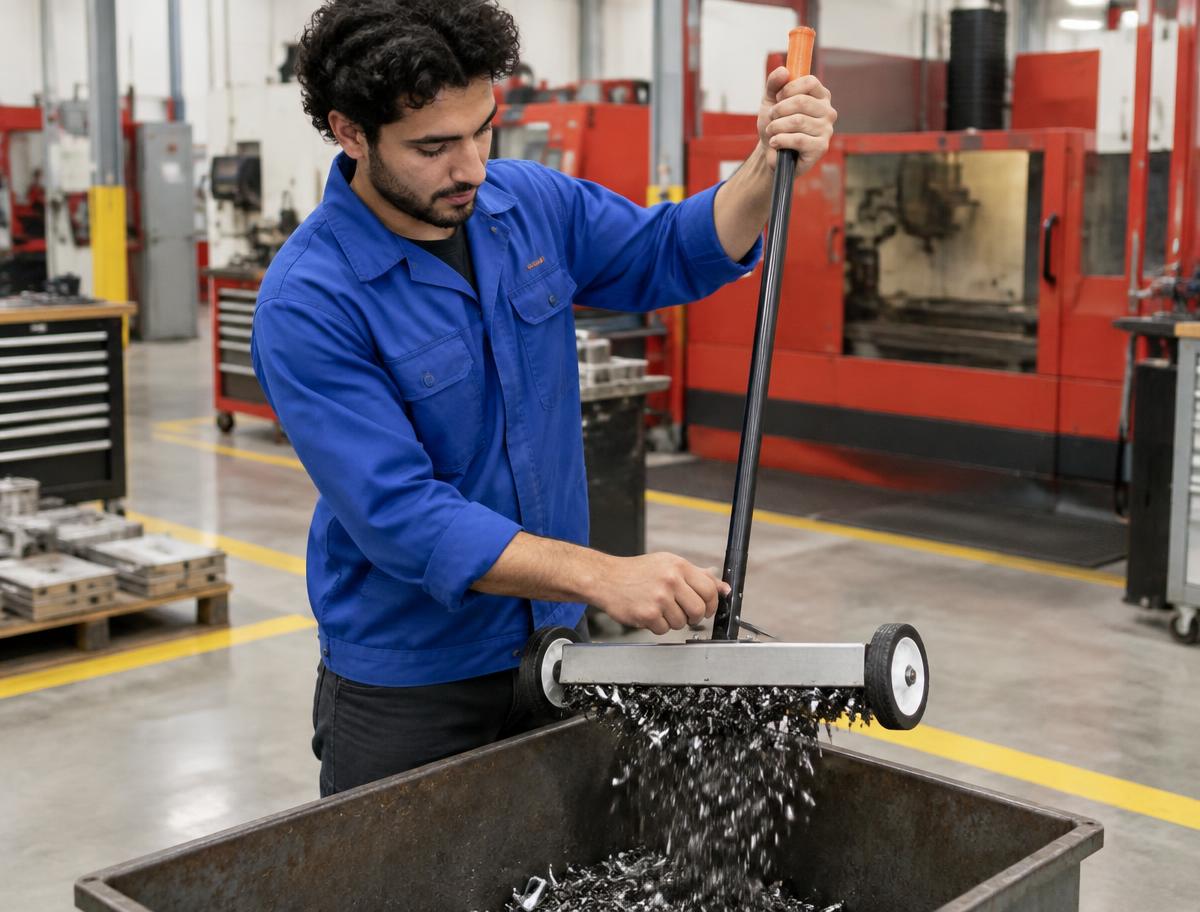
Magnetic sweepers are just as useful in fabrication shops, garages and farmyards. Steel shavings and dropped hardware can cut tires, injure feet and damage equipment. A regular sweep keeps floors safer and helps you recover parts that would otherwise be lost.
Care and safety
Wipe the magnet bar after use and keep it away from phones, bank cards, pacemakers and sensitive electronics. Store it where it will not snap onto tools or steel shelving unexpectedly. Check that the wheels turn freely and that the release mechanism works before each job. Explore ROK Magnets and compare the sizes and features listed on each product.
Frequently asked questions
Do magnetic sweepers work on grass?
Yes, on most lawns. Move slowly and make overlapping passes so the magnet can lift nails from between the blades.
Will a magnetic sweeper pick up aluminium nails?
No. Magnets only attract ferrous metals such as steel. Aluminium, copper and most stainless fasteners need to be picked up by hand.
How do I get the nails off the sweeper?
Many sweepers have a release handle or knob that separates the magnet from the debris. Hold the sweeper over a bin and release.
How often should I sweep a roofing site?
Sweep at least at the end of each day and again before final cleanup, with extra passes around the dumpster and driveway.
Can I use a magnetic sweeper on gravel driveways?
Yes. Gravel is one of the most common uses. Slow, overlapping passes work best.
Is a magnetic sweeper safe around electronics?
Keep strong magnets away from phones, cards, pacemakers and sensitive electronics, and store the sweeper carefully.
For related products, explore ROK Magnets.