

Which oscillating multi-tool blade should you use?
Choose the blade for the material first, then confirm that its attachment system fits your exact tool. High-carbon steel (HCS) blades generally suit clean wood; bi-metal blades cover many wood-and-metal tasks; carbide-tooth blades can handle demanding metal or mixed-material cuts when specifically rated for them. Grout needs a purpose-made abrasive accessory, not an ordinary wood blade.
Shape matters too. A plunge blade reaches into a narrow opening; a segmented blade follows longer shallow cuts. Neither label tells you whether the accessory can cut nails, stainless steel or masonry. Read the blade’s application markings and your tool’s manual before starting. This guide explains the decisions that matter for Canadian renovations, flooring installations and everyday contractor work, without treating any accessory as an all-purpose solution.
Start with the material, not the blade colour
An oscillating multi-tool moves its accessory through a small side-to-side arc. That movement makes it useful for controlled trimming, undercutting, scraping and work near adjacent surfaces. It does not turn a short blade into a replacement for every saw in the truck. Thick stock and long production cuts may be better handled with another appropriate tool.
Before choosing an accessory, identify everything along the cutting path. A timber jamb may contain nails; a painted board may cover adhesive; drywall can conceal wiring, pipework or fasteners. Check the assembly and isolate services as needed. When you cannot establish what is behind a surface, stop and investigate rather than relying on a stronger blade to make the cut safe.
HCS vs. bi-metal vs. carbide blades
HCS: clean wood and suitable softer materials
HCS means high-carbon steel. A toothed HCS wood blade can be a practical choice for clean timber, some plastics and similar materials listed by its manufacturer. It is not a reliable default for nail-embedded lumber. Contact with metal can quickly damage teeth that were intended for wood.
The HCS designation also appears on certain scraper accessories. That does not mean every HCS accessory has the same purpose: a scraper for soft silicone is different from a toothed wood-cutting blade. Match both the material and the actual accessory design.
Bi-metal: useful for mixed wood-and-metal work
Bi-metal saw blades combine different steels, commonly using a harder cutting edge supported by a more flexible body. Many are listed for wood with nails or selected metals, making them useful during renovation. The blade’s stated material limits still matter. A blade for soft nails is not automatically suitable for hardened screws, every bolt or all stainless steel.
Keep a dedicated clean-wood blade where finish quality matters and a suitable mixed-material blade for uncertain old framing. This avoids sacrificing a fine wood blade on the first concealed nail. It also makes it easier to recognise when a tool is struggling because the accessory is wrong rather than simply worn.
Carbide: teeth and grit do different jobs
Carbide-tooth blades can offer useful wear resistance in difficult materials when their manufacturer approves the application. Carbide-grit accessories use an abrasive edge or surface, often for grout removal or surface work. They are not interchangeable. A grout rasp will not perform like a toothed nail-cutting blade.
Buying the hardest-looking accessory is not a selection method. Check whether you need teeth, grit, a scraping edge or a sanding pad. Some grout accessories exclude very hard epoxy or cement-based grout, so confirm the specific accessory’s limits instead of assuming that carbide can remove every joint material.
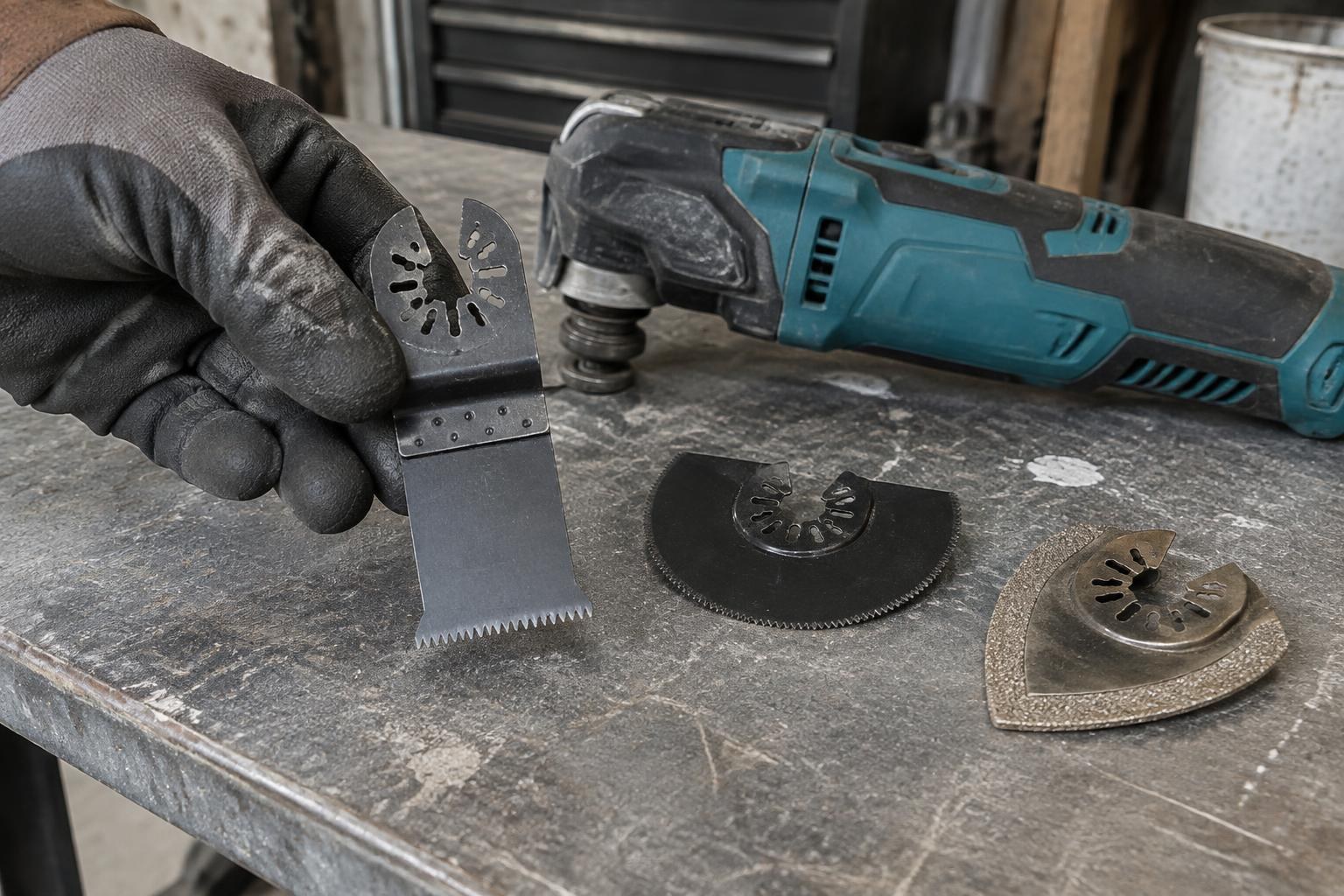
Material-to-blade comparison
| Material or task | Suitable starting point | What to check |
|---|---|---|
| Clean softwood or timber trim | HCS wood plunge or segmented blade | Cut depth, tooth pattern and finish requirements |
| Wood containing nails | Bi-metal or carbide-tooth blade rated for embedded metal | Nail material and the blade’s stated limits |
| Selected metal fasteners or thin metal | Metal-rated bi-metal or carbide-tooth blade | Metal type, thickness and recommended operating speed |
| Drywall openings | Accessory specifically suitable for drywall | Hidden services, dust control and depth |
| Grout joints | Grout-rated carbide-grit or suitable diamond accessory | Joint width, grout type and tile clearance |
| Soft caulk, sealant or adhesive | Appropriate flexible or rigid scraper | Substrate sensitivity and scraper suitability |
This table is a starting point, not a specification for an individual ROK product. Blade packaging and manufacturer instructions take priority. Materials that look alike can behave differently: stainless fasteners, hardened screws and ordinary construction nails should not be grouped together as if they have identical cutting requirements.
Plunge-cut, segmented and flush-cut blades
Plunge blades for openings and local cuts
A rectangular plunge blade is useful when starting a controlled cut away from an exposed edge, making a notch or trimming a small section. A narrower blade can improve access and manoeuvrability; a wider blade can help maintain a straight cut when there is enough clearance. Keep the accessory aligned and supported rather than twisting it inside the kerf.
Blade width is not the same as usable cutting depth. Check both before starting. A long blade may reach farther but also gives more opportunity to bend or contact something beyond the visible work. Choose the shortest practical reach for the assembly and keep depth under control.
Segmented blades for shallow runs and corners
A semicircular segmented blade can suit longer shallow cuts or trimming beside an edge. Its shape allows useful positioning around corners, but the guardless accessory still requires care. Watch the entire moving edge, not just the point touching the work, and protect adjacent finished surfaces from unintended contact.
Flush cutting describes access, not material capability
An offset blade can let the cutting edge work closer to a surface than a straight accessory. That helps with certain trim and fastener cuts. “Flush-cut” does not mean scratch-proof, and it does not tell you which metals the blade can cut. Use a suitable protective spacer where the task allows and test the approach before working on valuable finishes.
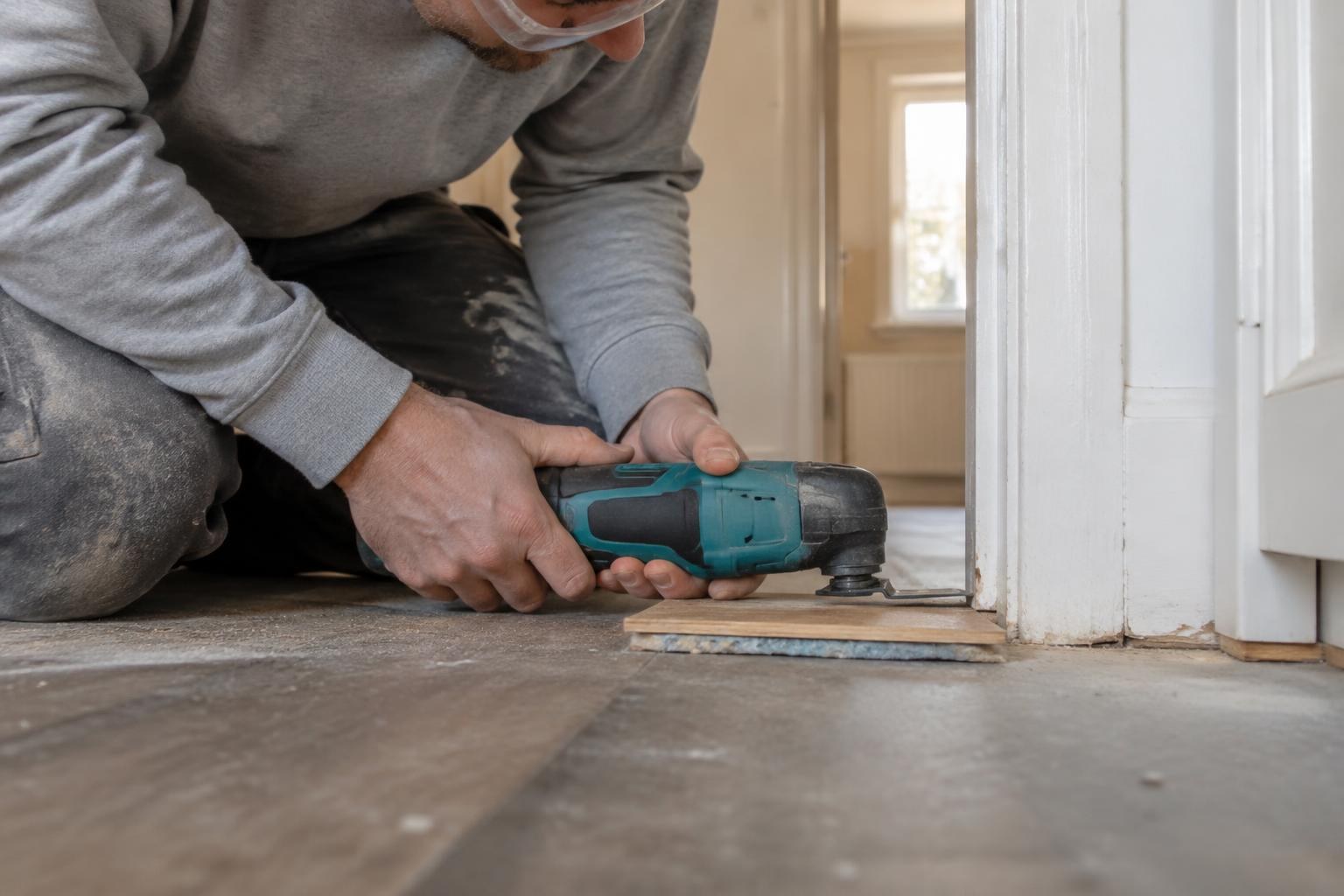
Flooring installation: undercutting a door jamb
For a typical flooring undercut, establish the required height using a scrap of the actual flooring and any relevant underlay. Follow the flooring manufacturer’s installation details, including required clearances. Use the sample as a guide where appropriate, then make a controlled horizontal cut with a wood blade or a metal-capable blade if concealed nails are possible.
Remove loose offcuts, check that the flooring fits and avoid cutting beyond what the assembly needs. Do not force the blade upward against the guide. On a finished doorway, a rushed undercut can damage both the jamb and the floor surface, while an unnecessarily deep cut can reach hidden fasteners or services.
Wood, nails and drywall in renovation
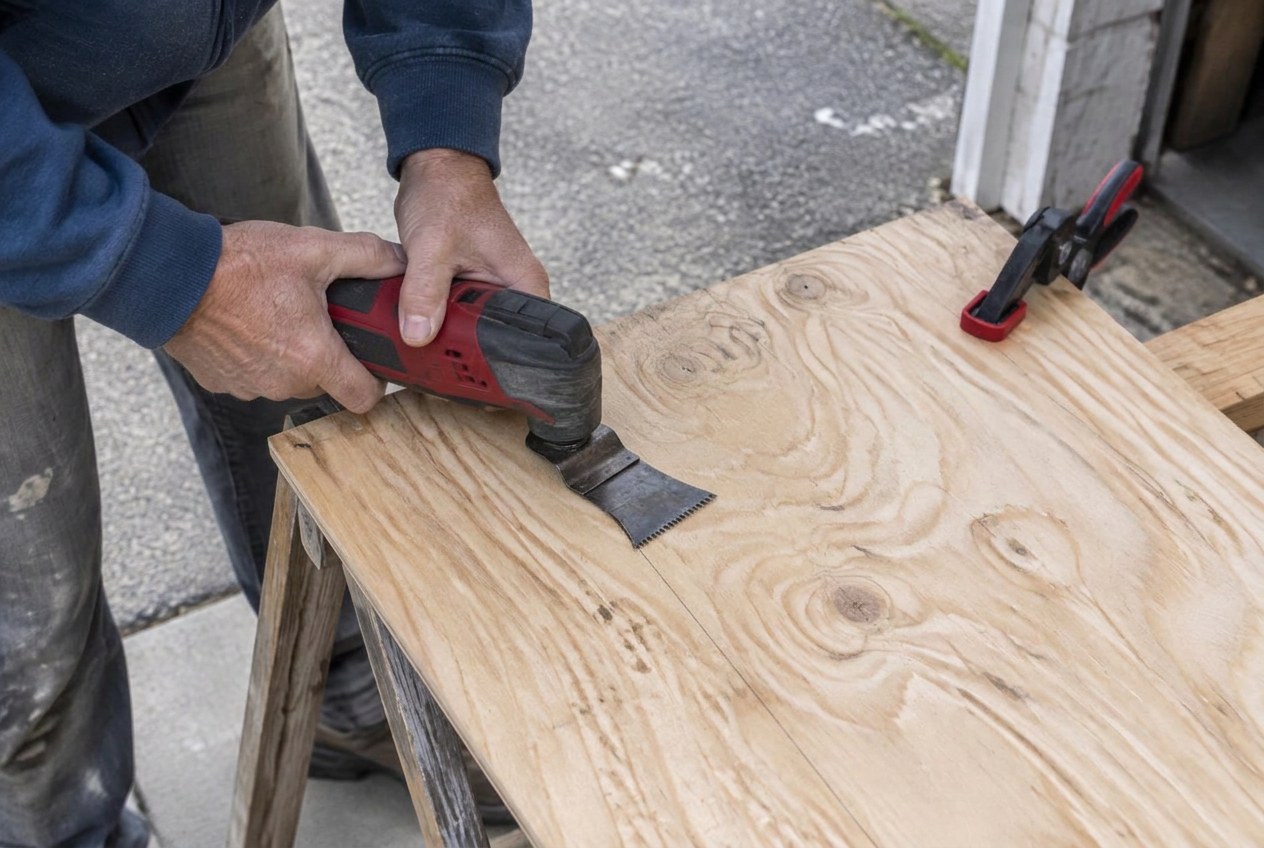
For old timber, inspect exposed areas and remove accessible fasteners before cutting where practical. When a nail must be cut, use a blade explicitly suited to that material. Allow the accessory to work without excessive pressure. If progress stalls, the teeth overheat or the tool changes behaviour, stop and reassess rather than leaning harder on the machine.
For drywall, mark the opening and establish what lies behind it. Use an appropriate blade, controlled depth and suitable dust management. Turning down the speed may help with some tasks, but it does not make blind cutting safe. Eye protection, respiratory controls where needed and the tool maker’s instructions remain essential.
A multi-tool is especially valuable for small corrections: trimming a projection, opening a local access point or removing an awkward piece of timber. For large demolition areas, choose equipment and methods suited to the job instead of consuming small accessories on work they were not intended to perform.
Grout removal and scraping accessories
Choose a grout accessory narrower than the available joint, leaving clearance from the tile edges. Work along the joint with deliberate control and avoid levering the accessory sideways against tile. Abrasive contact can chip or scratch adjacent finishes. Assess the grout type and the accessory’s stated suitability before committing to a whole room.
Scrapers are different tools for different materials. A flexible scraper can help on selected softer coatings or adhesive residues; a rigid scraper can suit tougher removal work when approved for the substrate. Test an inconspicuous area first. Neither is a guarantee against gouging timber, vinyl, painted surfaces or other delicate finishes.
Grout and demolition dust can present respiratory hazards, including silica depending on the material. Assess the material, use appropriate extraction and follow workplace requirements. An oscillating tool’s small size does not mean its dust can be ignored. Remove the battery or disconnect power before changing accessories and let hot blades cool before handling them.
Universal vs. Starlock compatibility
“Universal fit” is a manufacturer’s compatibility claim, not a promise that every oscillating accessory fits every machine. Mount shapes, clamping arrangements and adapter requirements vary. Check the accessory maker’s compatibility chart against your tool model, and use an adapter only where the relevant instructions approve it.
Starlock, StarlockPlus and StarlockMax identify related mounting and performance classes. Do not assume fit works in both directions throughout the family. Some higher-capacity tools accept several classes; lower-capacity tools may not accept higher-class accessories. The specific tool and accessory documentation determines the combination, not the visual similarity of the attachment.
Before running the machine, verify that the accessory is properly seated and locked, with no unintended movement. Never modify the mount, improvise a clamp or bypass a locking mechanism to make an accessory fit. A blade that can be held in place is not necessarily approved for that tool.
Common mistakes and signs of blade wear
Poor cutting is often the result of a mismatch rather than inadequate tool power. Repeatedly hitting metal with a clean-wood blade, using a coarse blade on delicate trim or choosing an accessory too wide for a grout joint can ruin the result before wear becomes the main issue.
Inspect teeth, mounts and blade bodies regularly. Stop using an accessory with cracks, bent mounting features, missing teeth or other damage. A blade that needs substantially more pressure, produces scorching or stops making a controlled cut deserves inspection. Those symptoms can also point to the wrong speed, unsuitable material or poor support.
Do not use a blade as a pry bar or attempt to extend a cut by twisting the accessory. Secure the work, keep hands away from the moving edge and choose an appropriate position before switching on. Replace worn blades instead of compensating with increasingly forceful handling.
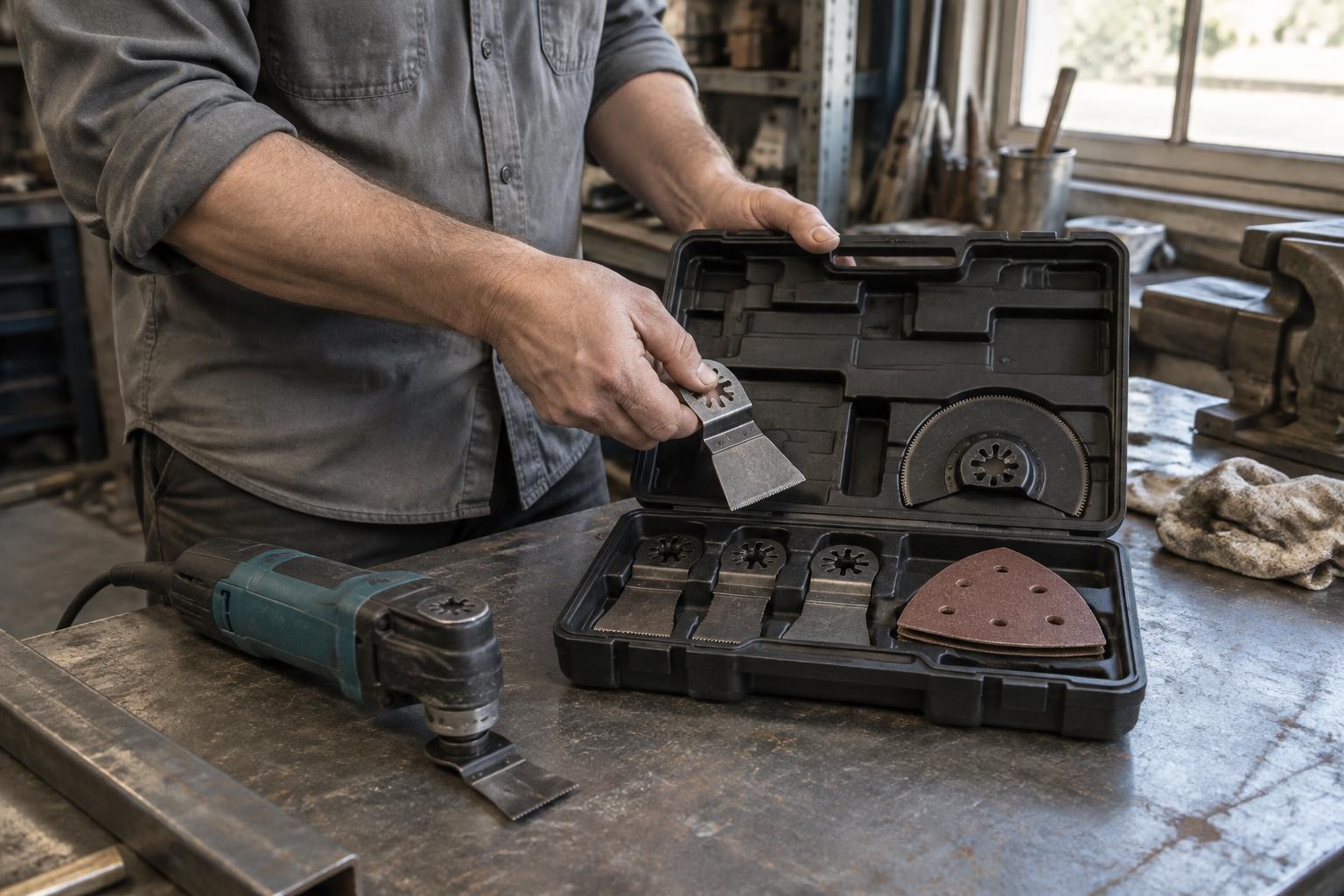
A practical contractor’s accessory kit
Build a small selection around actual work rather than carrying duplicates of one blade. Start with clean-wood plunge blades in a useful narrow and wider size, a mixed-material blade approved for your common fasteners, a segmented blade, an appropriate scraper and a sanding attachment if finishing tasks justify it. Add grout accessories only when tile work is part of your workload.
Keep accessories separated and identifiable. Protect sharp edges during transport, retain application information and record which mounts fit your machines. Browse the ROK Power Tool Accessories range as a starting point, then check each product’s material and tool compatibility before buying. The best kit is the one whose accessories match the jobs you actually perform.
Frequently asked questions
Are oscillating multi-tool blades universal?
Not necessarily. “Universal” describes a maker’s stated fit range. Confirm the exact tool model, mount type and approved adapter requirements before fitting an accessory.
Can a wood blade cut nails?
Only if the blade is explicitly rated for embedded metal. Ordinary HCS wood blades can lose their teeth quickly when they contact nails. Nail type also matters.
Is carbide always better than bi-metal?
No. Carbide-tooth and carbide-grit accessories serve different applications, and the correct choice depends on material, finish, access and the blade maker’s limits.
Which blade should I use to undercut a door jamb?
Use a suitable wood-cutting blade, or a mixed-material blade if nails may be present. Establish the height from the flooring assembly and control the depth.
Can an oscillating tool remove grout without damaging tile?
It can remove suitable grout with the correct accessory, but tile damage is still possible. Match joint width, avoid the tile edges and check grout compatibility.
Why does my blade burn the wood?
Possible causes include worn teeth, excessive pressure, unsuitable speed or an inappropriate blade. Stop, inspect the accessory and correct the cause rather than forcing the cut.
For related products, explore ROK Power Tool Accessories.