
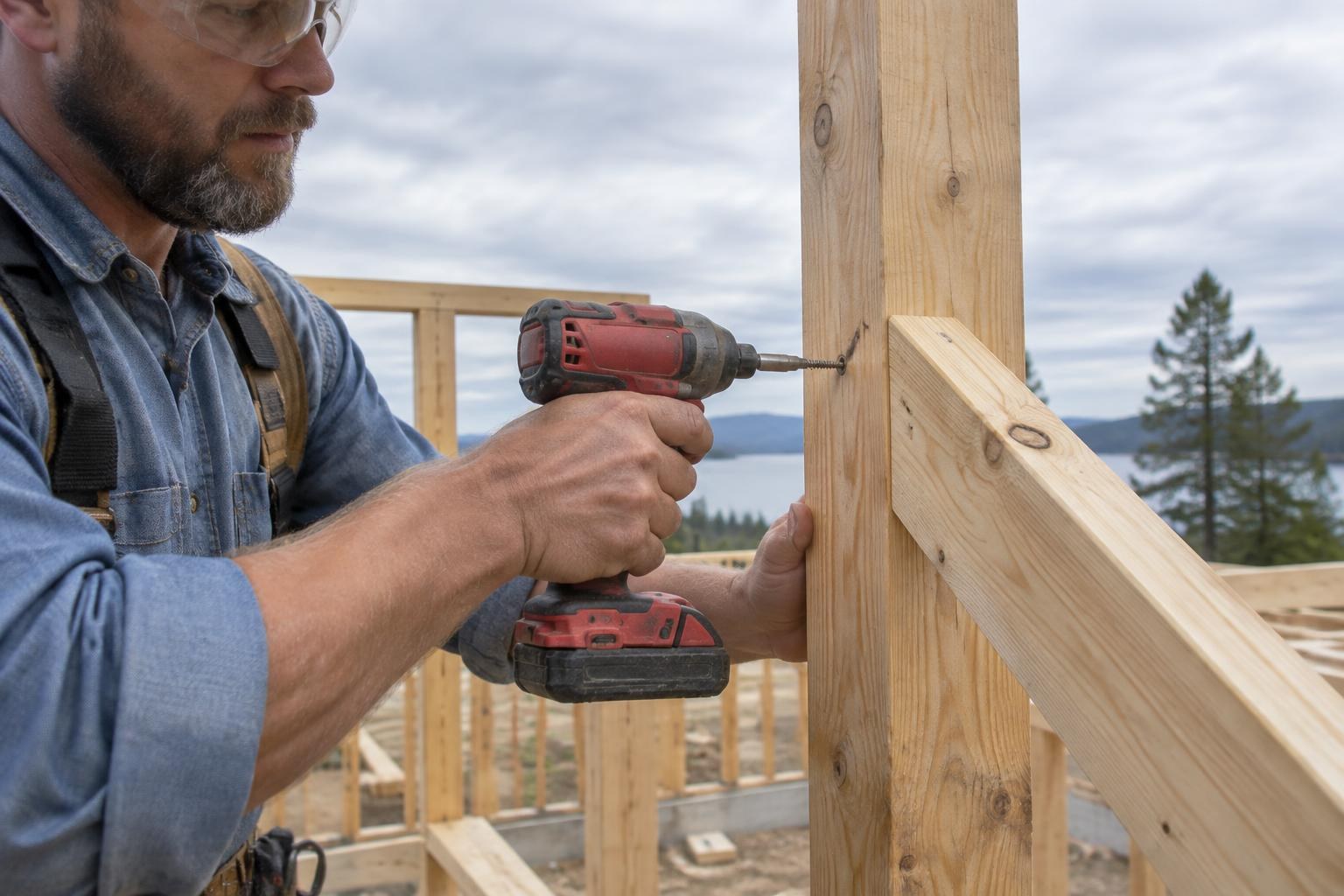
Robertson, Phillips or Torx: the short answer
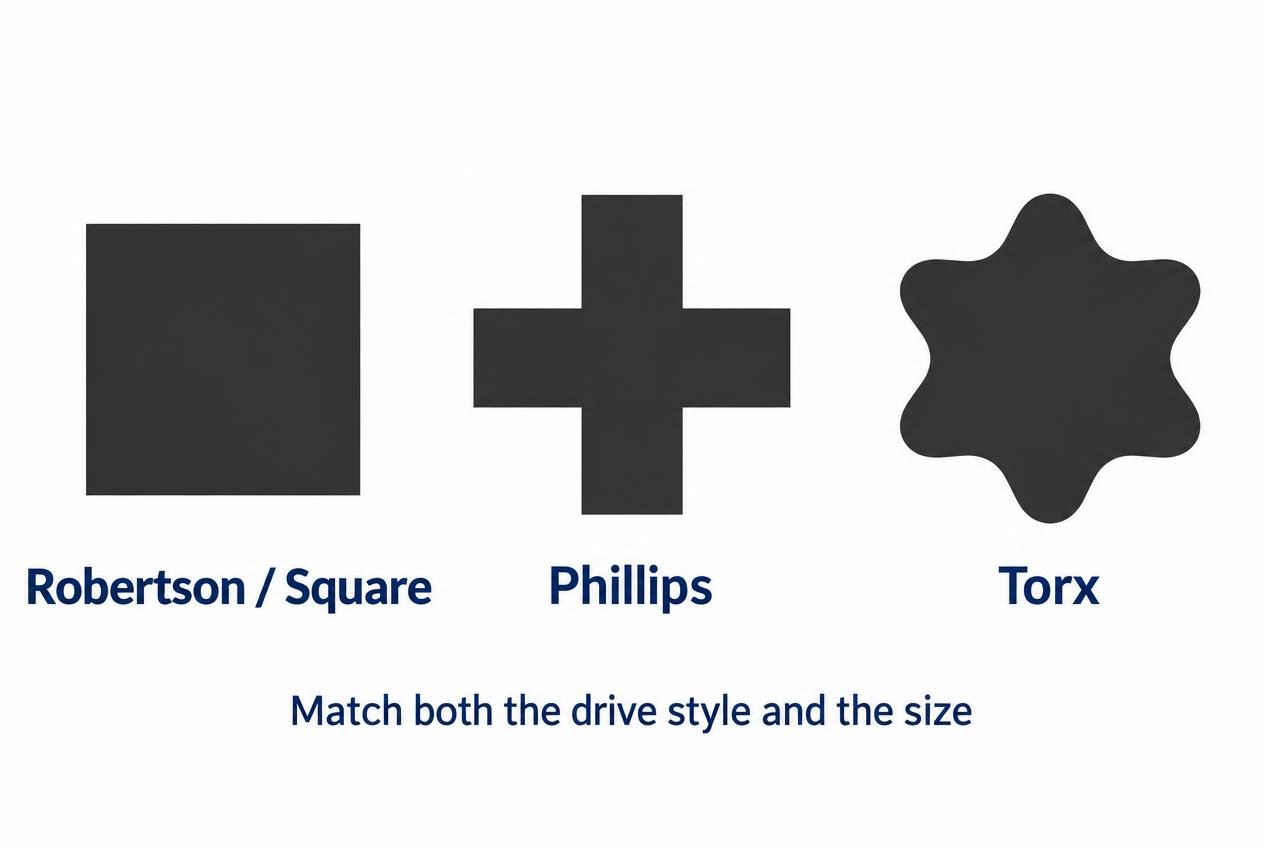
Use the drive style and size specified by the screw manufacturer. Robertson has a square drive, Phillips has a cross-shaped drive and Torx has six rounded lobes. A well-fitting square or Torx bit can provide secure engagement for construction work, while Phillips remains common in hardware and assembly. No drive style can compensate for the wrong bit size, damaged recess or excessive torque.
For a Canadian contractor’s kit, Square #1, #2 and #3, Phillips PH1, PH2 and PH3, and Torx T15, T20, T25 and T30 are useful starting points. Choose the actual assortment around your fasteners, not around a claim that one profile is always best. Structural screws, hinges and deck fasteners may require different bits even on the same project.
Understand the three drive profiles
Robertson and square drive
A Robertson-style bit engages a square screw recess. Traditional Robertson geometry includes a slight taper; some modern square-drive systems use different socket details. A good match can help retain a screw on the bit, which is useful when positioning hardware with one hand or working where the other hand supports the assembly.
That convenience depends on the particular screw and bit. Do not assume every square fastener will stick securely to every square bit. Check the marking and engagement before driving. An undersized bit can rock inside the recess; an oversized one may appear to fit while sitting too shallow to transfer torque safely.
Phillips
A Phillips recess has four main cross-shaped wings. The matching bit must seat fully without rocking. Phillips is common in cabinet hardware, household fittings and many assembly tasks, so it remains worth carrying even if much of your construction fastening uses square or Torx drives.
Phillips is not Pozidriv. Pozidriv fasteners and bits have additional features and should not be treated as interchangeable with ordinary Phillips. A superficially similar cross is not enough to establish the match. If a bit keeps slipping, inspect the recess and confirm the profile before blaming the screw material or driver.
Torx
Torx uses six rounded lobes rather than a hexagon or a pointed star. Matching lobes provide broad contact for torque transfer. This makes Torx useful in many decking, construction and equipment applications, but the screw manufacturer still determines the required profile and size.
Torx Plus and tamper-resistant variants are separate considerations. A security screw may have a centre pin requiring a matching hollow-tip accessory. Do not assume an ordinary Torx bit suits every six-lobed recess. Identify the actual fastener before choosing an accessory or increasing the tool’s power.
Why Robertson screws are familiar in Canada
The Robertson screw is associated with Canadian inventor Peter Lymburner Robertson and is well established in Canadian trade language. The University of British Columbia’s Dictionary of Canadianisms documents the term and its construction context. For many Canadian carpenters, a square-drive screw is an everyday fastener rather than a specialist item.
That familiarity is helpful, but it is not a compatibility rule. A box of screws purchased for a Canadian project may contain Phillips, Torx, square or another drive. Check the packaging and the recess on the screw itself. Carrying a mixed assortment saves time when a job combines familiar framing materials with imported fixtures or specialised fastening systems.
Drive-system comparison
| Drive | Common applications | Advantages with correct fit | Limitations |
|---|---|---|---|
| Robertson / square | Canadian woodworking, construction and selected cabinet screws | Secure square engagement; some matched systems retain the screw on the bit | Wrong size or socket geometry can cause rocking and damage |
| Phillips | Hinges, fittings, assembly and general hardware | Widely encountered; useful across common household and trade tasks | Can cam out under load; not interchangeable with Pozidriv |
| Torx | Decking, selected construction screws and equipment | Rounded lobes provide effective torque transfer | Exact T size and variant must match; not a hex drive |
These are typical uses, not exclusive categories. The drive profile does not establish a screw’s structural rating, corrosion suitability or permission for exterior use. Choose the fastener for the application first, then select its matching bit. A Torx head alone does not make a screw suitable for a deck connection or structural assembly.
Common bit sizes and how to check them
Square #1, #2 and #3 may be labelled R1, R2 and R3 or SQ1, SQ2 and SQ3, depending on the maker. Phillips PH1, PH2 and PH3 are separate sizes within the Phillips family. Torx T15, T20, T25 and T30 identify different lobed profiles. Numbers from one system do not convert to another.
Read the fastener instructions where possible. With the tool stopped, place the candidate bit in the recess and check whether it seats fully, with minimal play. Do not use a smaller bit because it reaches the bottom or a larger bit because it seems to grip the top edge. Both can concentrate load on too little material.
| Bit family | Useful assortment | Selection reminder |
|---|---|---|
| Square / Robertson | #1, #2, #3 | Confirm the screw’s square-drive marking and full engagement |
| Phillips | PH1, PH2, PH3 | Match the Phillips size; check that it is not Pozidriv |
| Torx | T15, T20, T25, T30 | Match the exact T size and any security variant |
Colour coding can help organise a kit, but it should not replace markings. Systems differ between makers and colours become hard to distinguish on dirty or worn accessories. Keep sizes separated and replace bits whose tips have rounded edges, chips or other visible damage.
Cam-out, stripped screws and damaged recesses
Cam-out occurs when the bit climbs or slips out of the screw recess instead of transferring torque effectively. Poor alignment, insufficient engagement, worn accessories and excessive torque can all contribute. Phillips geometry can be prone to this behaviour; square and Torx fasteners are not immune when the bit or recess is wrong.
Stay in line with the screw and keep the bit fully seated. Apply controlled forward pressure without leaning so hard that you lose balance or crush the work. Stop when slipping begins. Repeated bursts can destroy the remaining recess and turn a straightforward adjustment into a removal job.
If a screw is already damaged, reassess the approach before continuing. Clear debris from the recess where safe, try a correctly fitting undamaged bit and use a suitable extraction method if necessary. Do not strike a powered tool or improvise an unsafe grip to force a ruined fastener to move.
Choosing impact-rated driver bits
Use bits approved for impact-driver use when the application calls for an impact driver. Manufacturers may use particular steels, heat treatment, tip geometry or torsion zones to handle repeated load peaks. These are product-specific designs, not a universal numerical “impact rating” shared by every accessory maker.
Impact-rated does not mean unbreakable. It also does not give you permission to apply maximum torque to every fastener. Small hinge screws, delicate fittings and finish-sensitive materials often benefit from a drill/driver with a clutch or a hand tool for final tightening. Follow the hardware maker’s requirements and the tool’s instructions.
Inspect both the bit and its holder. A loose holder, damaged retaining feature or bent extension can undermine otherwise good engagement. Disconnect power before changing accessories where the tool instructions require it, and verify that the bit is locked in place before returning to work.
Short vs. 2-inch, 3-inch and 6-inch bits
Length affects reach and control, not the drive size. Short insert bits generally work in a compatible holder; longer power bits can provide direct reach in appropriate chucks. Confirm retention and shank compatibility. A bit that looks long enough is not automatically intended for direct installation in every tool.
A 2-inch bit can be a convenient everyday length. A 3-inch bit can improve clearance near recessed hardware, while a 6-inch bit may reach into a deeper assembly. Longer reach also makes it easier to introduce wobble or side load. Choose the shortest practical arrangement that keeps the tool clear and the bit aligned.
Extensions and magnetic holders can help with access and positioning, but each additional connection affects the setup. Check engagement, avoid using an extension as a lever and do not rely on magnetism alone where mechanical retention is required. Reach should improve the approach, not hide a poor fit.
Bits for woodworking, cabinetry and decking
Woodworking and cabinet installation
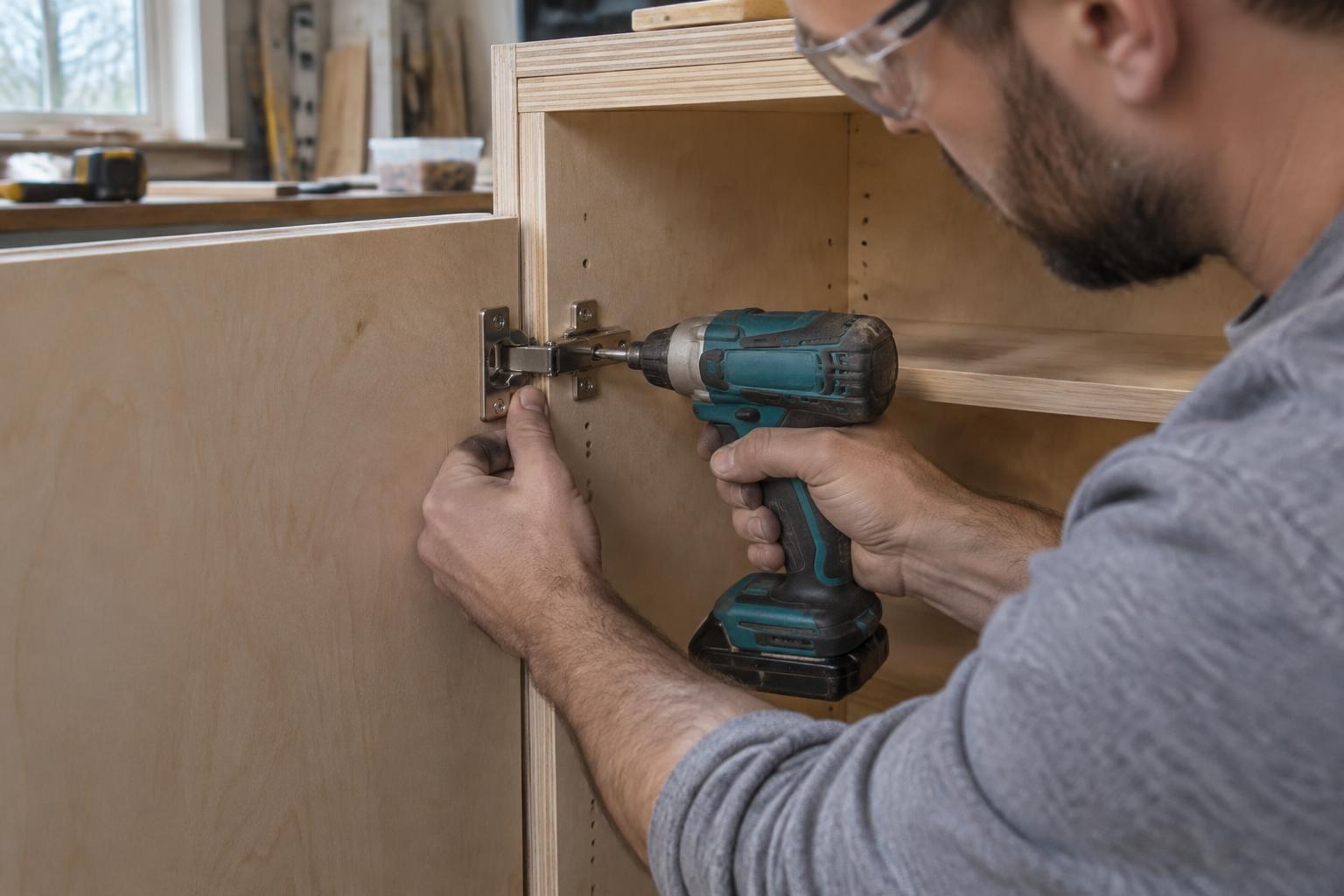
Square drive is useful where the selected screws use a square recess, while Phillips appears on many hinges and fittings. Match the hardware exactly. Use pilot holes and countersinking where the fastener and material call for them. Near an edge, controlled preparation can prevent splitting that a different bit profile would not solve.
For small hardware, start carefully and finish with controlled torque. Overdriving a hinge screw can strip the timber hole even if the metal recess remains intact. Holding power depends on the assembly and fastener selection, not just the driver’s grip on the head.
Decking and construction fastening
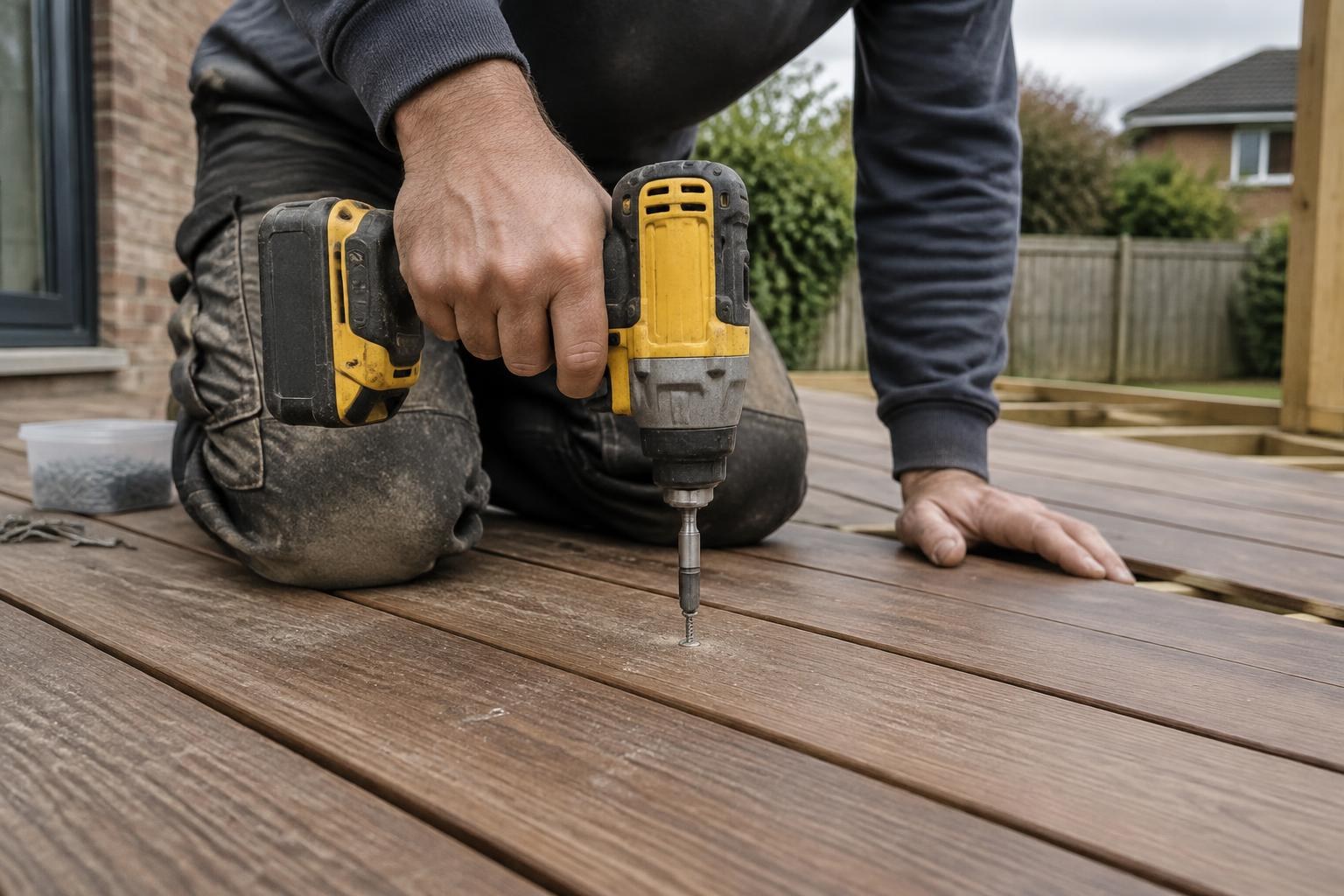
Many deck and construction fasteners use Torx or square drives, but check the box rather than making assumptions. Follow the screw maker’s installation requirements, including tool settings, pilot holes and embedment. Structural connections may require specific listed fasteners; substituting a convenient screw because its bit is already installed is not an acceptable shortcut.
Keep the tool perpendicular to the fastener unless the approved installation specifies otherwise. Avoid overdriving below the intended surface. A screw buried too deeply can damage the board or connection and may complicate later repairs. Practice on suitable scrap when establishing settings for unfamiliar materials.
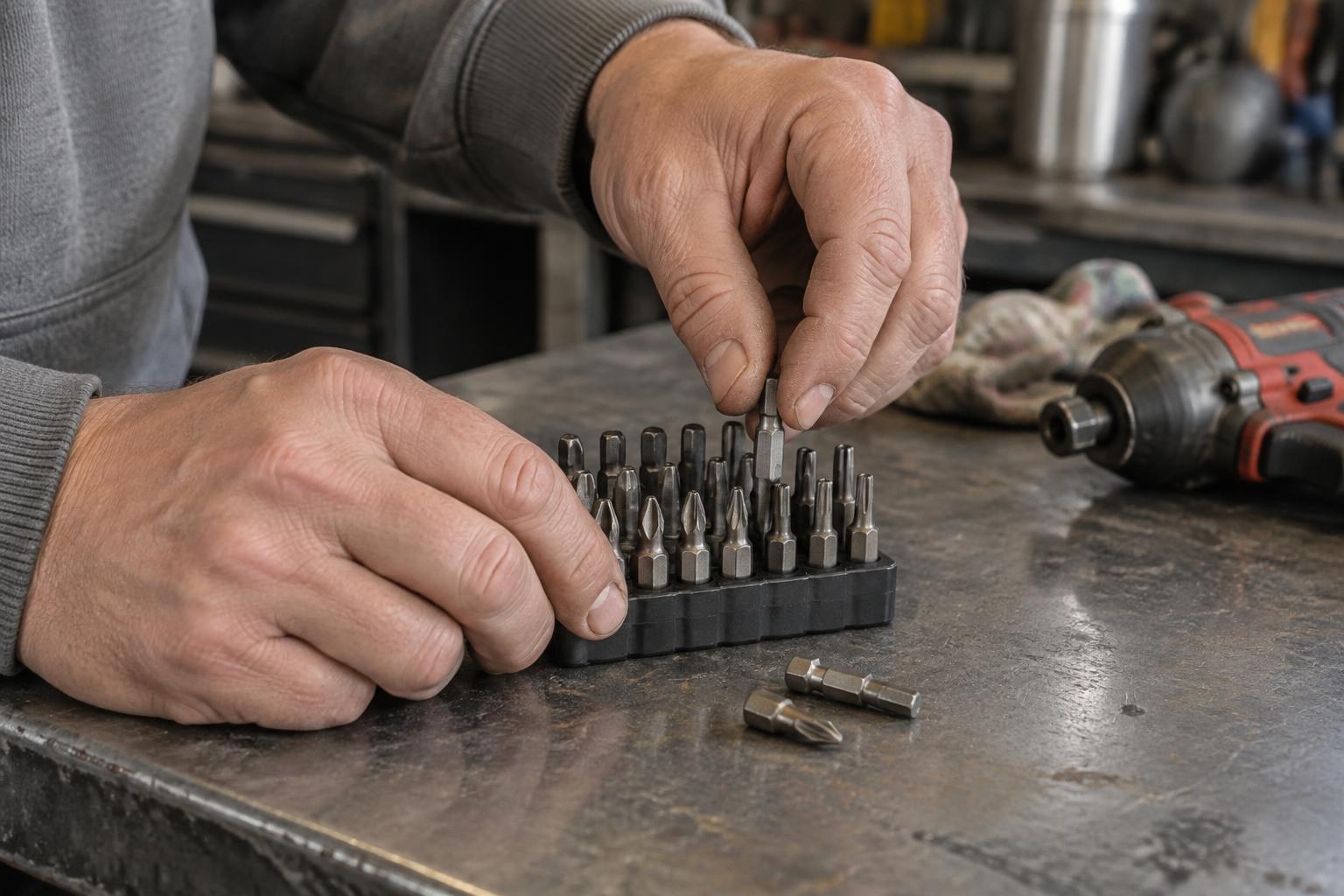
A useful Canadian contractor’s assortment
Start with your frequently used sizes, then add the less common profiles your fittings require. Carry spare Square #2 and PH2 bits if those match regular work, along with the Torx sizes specified by your deck and construction screws. Add short insert bits, a compatible holder and a few longer bits for awkward access.
Separate ordinary and impact-approved accessories and keep the markings readable. Check replacement bits against actual fasteners before stocking a whole kit. Explore ROK Power Tool Accessories for driver bits and related accessories, then confirm the individual product’s size, length and tool suitability. A compact, organised selection usually works better than a large mixed container of worn tips.
Frequently asked questions
Is Robertson better than Phillips?
It depends on the fastener and task. A matched square drive can offer secure engagement, but the required screw profile decides which bit to use. Do not substitute one for the other.
Are Torx and hex bits interchangeable?
No. Torx has six rounded lobes; a hex drive has six straight sides. Use the exact profile and size specified for the fastener.
Is PH2 the same as Square #2?
No. The numbers belong to different drive systems. PH2 is a Phillips size and Square #2 is a square-drive size.
Do I need impact-rated bits for an impact driver?
Use accessories the maker approves for impact-driver use. The designation does not make a bit unbreakable or establish the correct tightening torque for your screw.
Why does the bit keep slipping out?
Check the profile, size, tip wear, recess condition and alignment. Stop repeated slipping before it strips the screw, and choose controlled torque appropriate to the hardware.
Are longer driver bits stronger?
Not necessarily. Length mainly changes access and control. Choose a suitable rated accessory and the shortest practical reach instead of assuming a longer bit can take more load.
For related products, explore ROK Power Tool Accessories.