

Framing hammer vs. claw hammer: which should you choose?
A framing hammer is a type of claw hammer, usually configured for driving nails in rough construction. It often has a longer handle, a heavier head and a straighter ripping claw. A general-purpose curved-claw hammer is usually more compact and useful for household repairs, finish-sensitive carpentry and pulling nails. Features vary, so read the model description rather than treating the names as fixed specifications.
For many occasional repairs, a 16 oz smooth-face hammer is a sensible starting point. A 20 oz hammer can offer a useful balance for broader carpentry, while a 22 oz framing model may suit someone comfortable with a heavier swing. These weights generally describe the head, not the complete tool. Balance, handle length and control matter as much as the number.
What makes a framing hammer different?
Framing is about placing and fastening construction timber, often repeatedly throughout the workday. A framing hammer commonly has a longer handle that can increase swing leverage and a head selected for larger nails. Many use a milled face, but smooth-face framing hammers also exist. Some have nail-starting features; others do not.
A general-purpose claw hammer can drive many of the same nails, but its shorter reach and lighter configuration may change how it feels during repeated work. The right choice is not simply whichever hammer appears bigger. Consider the nail, the material, your working position and how reliably you can land controlled strikes.
“Framing” does not mean a hammer is approved for every demolition task. Pulling a nail is different from levering heavy structural material or striking hardened steel. Use the tool only within its intended applications, and select a pry bar, sledgehammer or other suitable tool when the job needs a different kind of force.
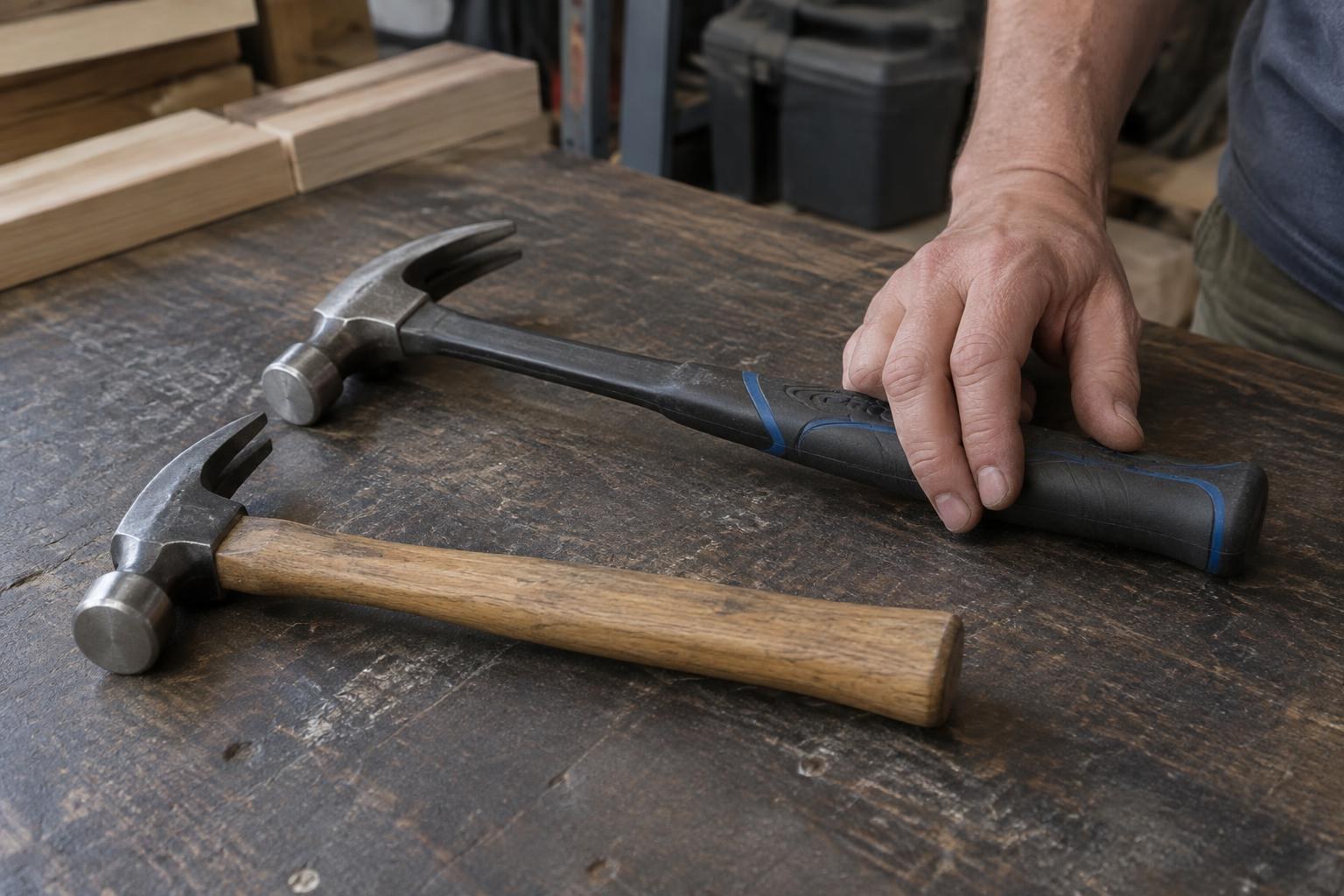
Compare hammer types by task
| Hammer type | Typical characteristics | Common applications | Main trade-off |
|---|---|---|---|
| General-purpose curved-claw hammer | Often shorter, smooth-faced and moderate in weight | Repairs, assembly, carpentry and nail pulling | May take more swings on larger framing nails |
| Framing or rip-claw hammer | Often longer with a straighter claw; smooth or milled face | Rough carpentry and timber framing | Larger swing needs room and control |
| Rubber mallet or dead blow hammer | Different head materials and intended striking behaviour | Suitable assembly and positioning tasks | Not a substitute for driving nails with a claw hammer |
| Sledge or club hammer | Heavier impact tool designed for its stated applications | Selected demolition or heavy striking tasks | Unsuitable for fine nail-driving and delicate finishes |
The last two categories help define the limits of a claw hammer rather than replace the choice between framing and general-purpose models. Do not use a standard nail-driving hammer on masonry, hardened punches or other targets unless the manufacturer specifically approves that combination. An accessory’s intended use is part of tool selection.
16 oz vs. 20 oz vs. 22 oz hammers
16 oz: control for everyday work
A 16 oz head can suit occasional repairs, light carpentry and tasks where placement matters more than maximum impact. Less head weight may be easier to manage in awkward positions or during longer sessions. It is still a real striking tool: a light hammer can damage a finish, bend a nail or cause injury if used carelessly.
For someone building a first toolbox, a comfortable smooth-face 16 oz hammer is worth considering. Try the grip and balance before buying where possible. A heavier tool that feels impressive in a shop can become frustrating when you have to start small nails or work close to finished material.
20 oz: a broader carpentry option
A 20 oz hammer is a common middle ground for someone doing general construction, renovation and more frequent carpentry. The extra head weight can increase impact at a given swing, but actual performance also depends on swing speed, handle length and technique. It is not automatically faster for every user or every nail.
Consider whether the hammer remains comfortable after repeated use. Grip thickness, head balance and working reach can make two tools with the same head weight feel different. If control deteriorates or you find yourself choking up excessively, reassess the configuration rather than pushing through fatigue.
22 oz: choose it for the work, not the label
A 22 oz framing hammer can suit rough timber work when the user has room for a controlled swing and is comfortable with the additional load. It may be less convenient for small hardware, close quarters or finish-sensitive tasks. Bigger is not a substitute for accuracy.
Manufacturers offer different head weights and designs, including lighter framing models. The weights discussed here are comparison points, not a statement that every ROK hammer is available in each configuration. Check the individual product listing before choosing.
| Head weight | Useful starting application | Consider before buying |
|---|---|---|
| 16 oz | Household repairs and lighter carpentry | Grip, nail size and finish sensitivity |
| 20 oz | General carpentry and renovation | Balance over repeated swings and available working room |
| 22 oz | Rough framing for a comfortable user | Additional effort, fatigue and accuracy |
Smooth-face vs. milled-face hammers
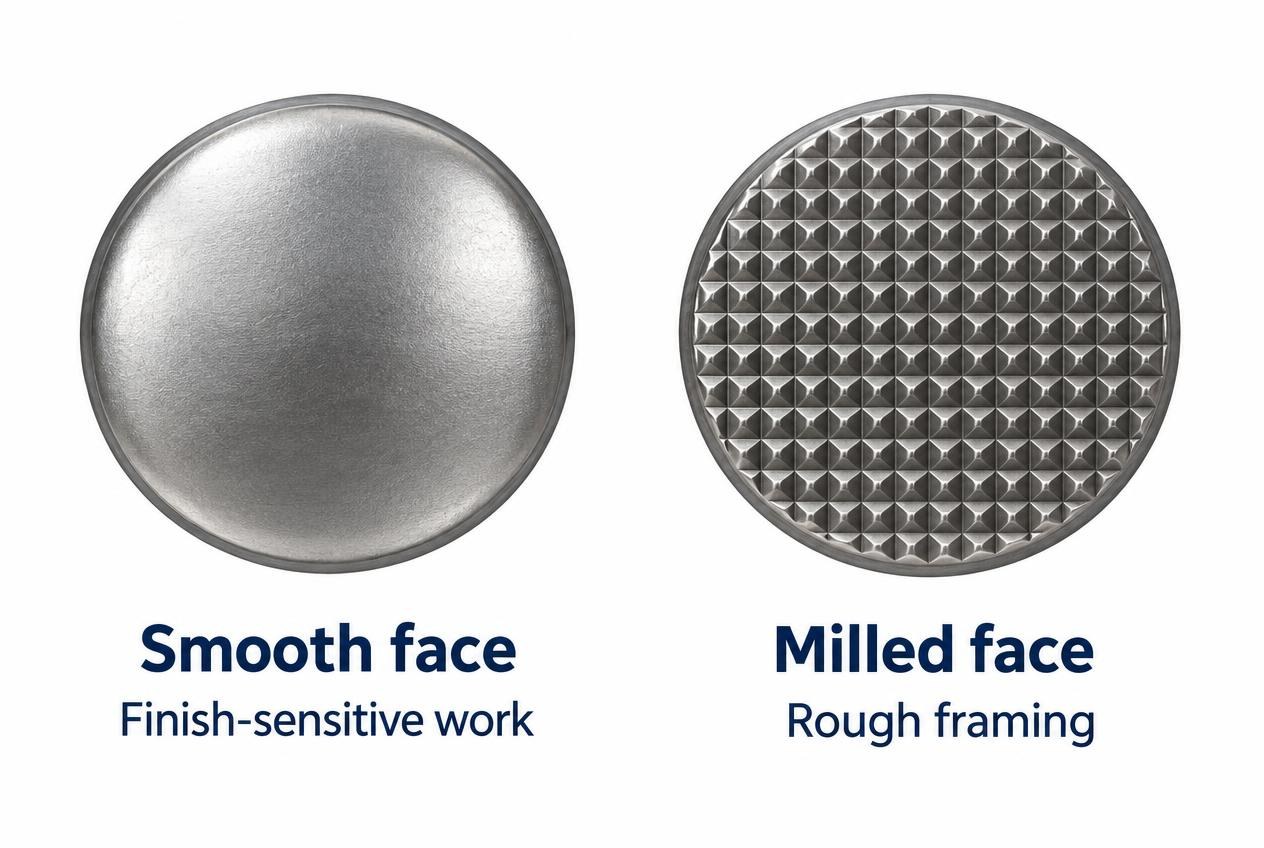
A smooth face generally leaves less distinctive damage if it accidentally contacts the work. That makes it useful around visible trim, cabinetry and other finish-sensitive material. It cannot prevent dents: missing a nail with a smooth hammer still transfers impact into the surface.
A milled or waffle-pattern face can improve grip on a nail head and reduce some glancing contact during rough framing. If it hits the timber, it can leave a clear textured impression. This trade-off is often acceptable where the surface will be concealed, but less suitable beside finished joinery.
Choose the face for the result you need. Do not grind or alter the striking face without manufacturer-approved procedures. A chipped, cracked or severely damaged face should be taken out of service. Surface texture is not a reason to keep using a damaged hammer.
Straight claw vs. curved claw
A curved claw can provide useful leverage for pulling nails against a surface. Protect finish-sensitive work with a suitable sacrificial block where practical and maintain a stable position. Pull progressively rather than using uncontrolled force that can break the surrounding timber or cause a sudden release.
A straight or rip claw is often convenient for selected prying and renovation work. It can also pull nails, but its geometry changes how leverage is applied. Neither style should be used as a general demolition bar beyond the hammer maker’s intended use. If a nail or assembly needs excessive force, change tools.
Inspect the claw tips for damage and keep fingers away from pinch points. Nail pulling can release suddenly, especially in split or rotten wood. Make room for that movement, support yourself securely and keep others clear. Choosing a better claw does not remove the need for a controlled stance.
Wood, fibreglass and steel handles
Wood handles
Hickory and other suitable hardwood handles are traditional options valued for feel and shock absorption. Some designs allow a correctly specified replacement handle. Wood still needs inspection for cracks, splinters and a loose head. Moisture, poor storage and overstrikes can damage it.
Do not repair a cracked handle with tape and return it to service. Follow the manufacturer’s replacement instructions or replace the tool. A repair that looks secure on the bench may fail under repeated impact.
Fibreglass handles
Fibreglass-handled hammers often combine a composite core with a grip or protective jacket. Some models include features intended to reduce overstrike damage. Those features depend on the actual construction, not simply the word “fibreglass”. Check the head attachment, grip and shaft before use.
Avoid assuming that a non-metallic-looking handle makes a hammer electrically safe. Only a tool specifically designed and rated for an electrical application should be considered for that purpose, and nail-driving work near services requires proper assessment regardless of handle material.
Steel handles
One-piece steel designs can provide a durable head-and-shaft assembly, commonly with a separate grip intended to improve handling. Comfort and transmitted vibration vary with design. A steel hammer with a good grip may feel better to one user than a composite hammer, while another user prefers wood.
Compare real handling characteristics: balance, grip security, shaft length and comfort during controlled movements. No material alone guarantees a comfortable workday. Keep grips clean and replace a tool whose grip or structure is damaged.
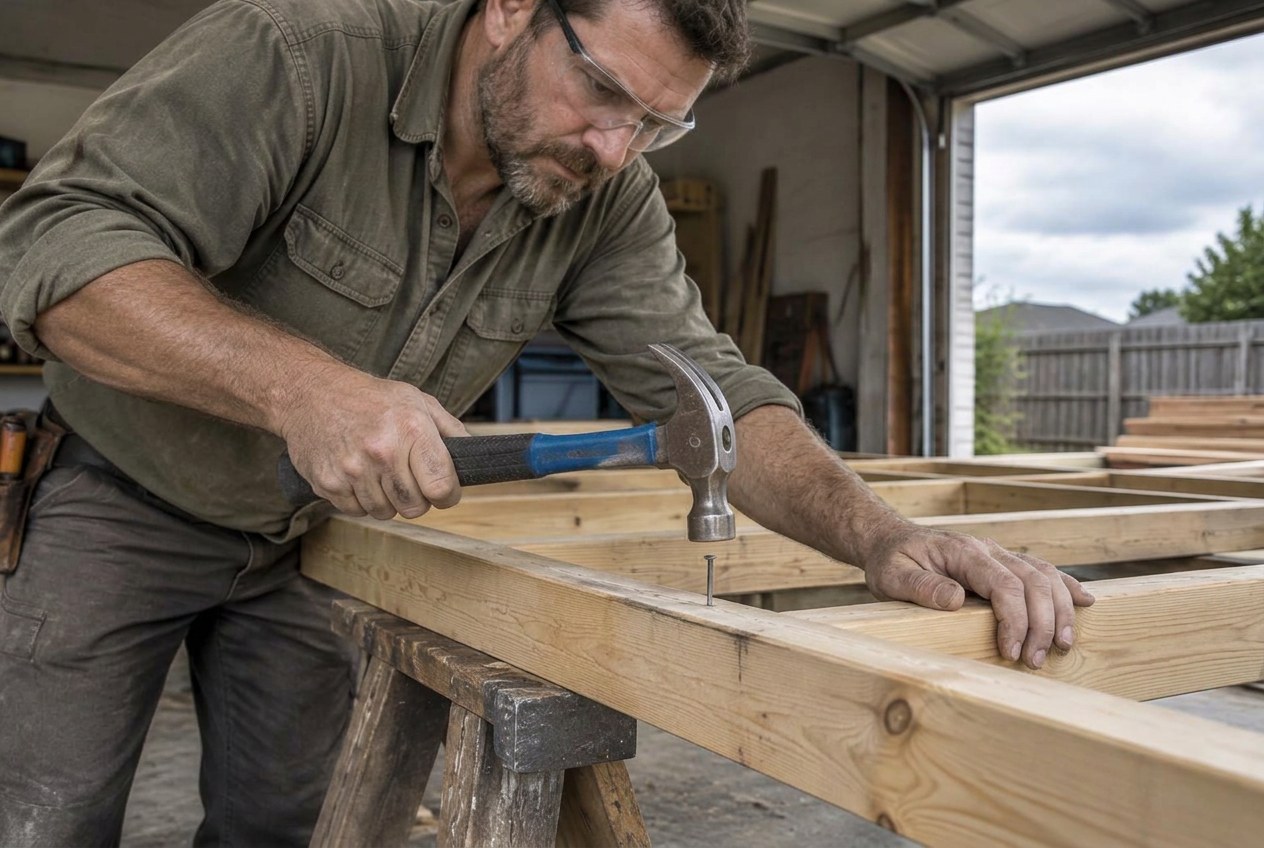
Choose for carpentry, renovation and DIY
For visible trim and household repairs, prioritise a smooth face and a configuration that lets you place small strikes accurately. Use a suitable nail set where required rather than trying to bury a finish nail with increasingly risky hammer contact. For rough framing, choose sufficient reach and a head weight you can control consistently.
Renovation work may mix nail driving, pulling and material removal. Carry a suitable pry bar instead of making the claw hammer do everything. For delicate assembly, a correctly selected mallet or dead blow tool may be more appropriate, but check the target material and the tool maker’s guidance before striking.
Common buying mistakes
Another mistake is assuming every blue-grip or similar-looking hammer shares the same construction. Product appearance does not establish head material, handle construction or intended applications. Read the listing and inspect the tool. Compare specifications that are actually stated rather than borrowing claims from another brand’s model.
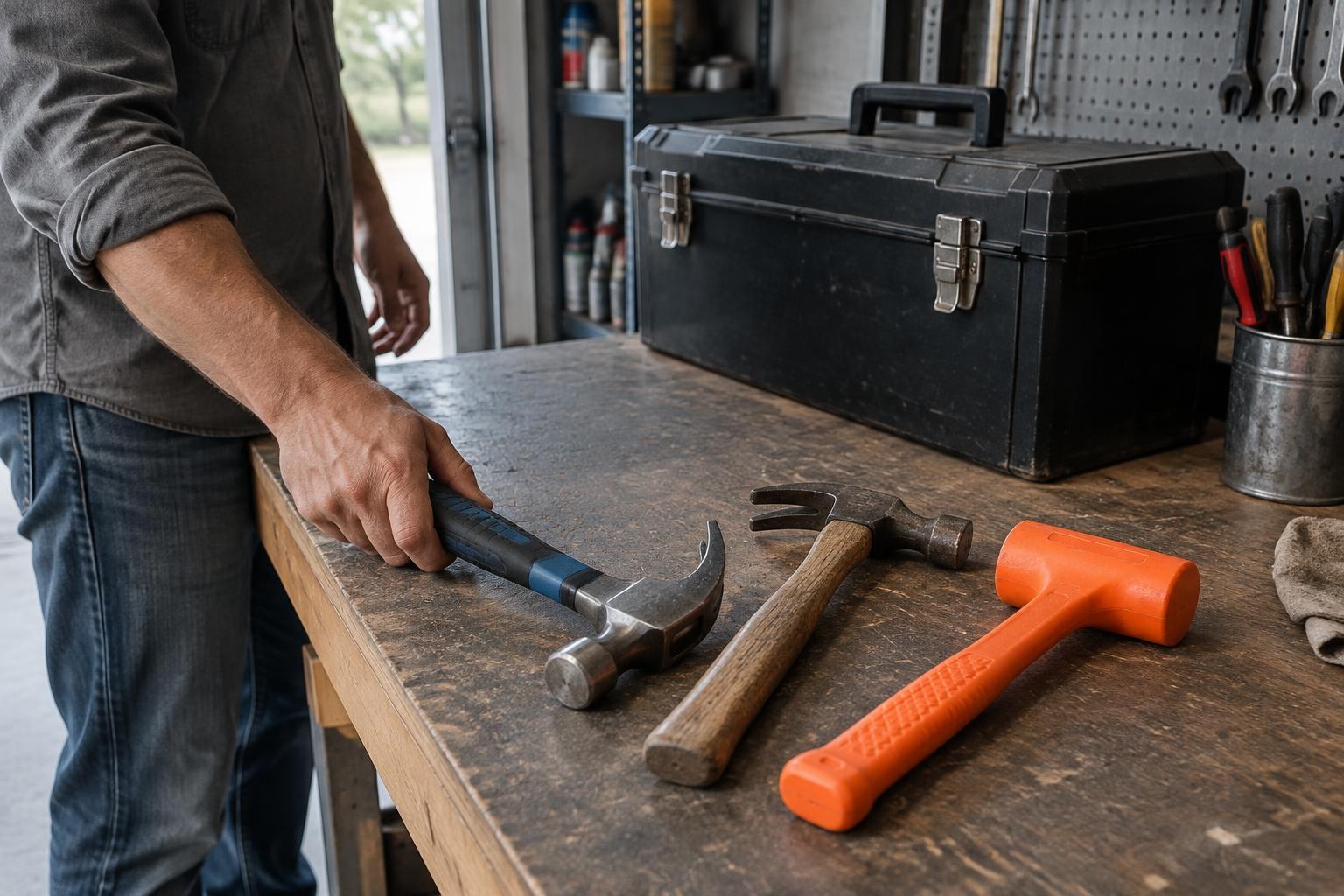
Hammer safety and a practical contractor selection
Inspect the face, claw, handle and head attachment before work. Remove tools with a loose head, cracks, splinters or damaged striking surfaces from service. Wear appropriate eye protection and keep bystanders clear of flying chips. Do not strike one hammer with another or use a nail-driving hammer on hardened objects outside its intended application.
Keep your free hand away from the strike path, start nails with controlled contact and support the work. Maintain a secure grip without overreaching. Stop when fatigue affects accuracy. Workplace users should follow applicable Canadian provincial or territorial requirements and the manufacturer’s instructions, including the requirements for any associated struck tools.
A useful contractor selection might include a comfortable general-purpose smooth-face hammer, a framing hammer suited to regular timber work, a nail set and a suitable pry bar. Add specialised striking tools only for actual applications. Explore ROK Striking Tools, comparing the stated weight, face, handle and intended use of each product rather than assuming every model has the same features.
Frequently asked questions
Is a framing hammer a claw hammer?
Yes. It is generally a claw-hammer configuration intended for framing. The exact head weight, face texture, handle and claw design vary by model.
Is a 22 oz hammer better than a 16 oz hammer?
Not for every job. A heavier head may suit rough framing, while a lighter one can be easier to control for repairs and smaller nails. Choose for comfort and accuracy.
Can I use a milled-face hammer for finish work?
It can drive nails, but a missed strike can leave a pronounced patterned mark. A smooth face is generally a more appropriate starting point near visible finishes.
Does a curved claw pull nails better?
A curved claw often provides convenient leverage, but nail position and available clearance matter. Use a suitable pry bar when the task exceeds the hammer’s intended application.
Are fibreglass handles electrically safe?
Do not assume so. Ordinary handle material is not an electrical safety rating. Use only appropriately designed tools and safe procedures for work near electrical services.
Should I replace a hammer with a loose head?
Take it out of service. Use a manufacturer-approved repair or correctly specified replacement handle only where the design allows it; otherwise replace the tool.
For related products, explore ROK Striking Tools.